Holding the Zones Note 3 of 7
Red, White and What a Sub-Zero Wine Unit Can Actually Hold
- Written by
- Bjorn Aaltonen
- Bench
- wine storage and dual zones
- Years in the trade
- 15
- Refrigerant
- EPA 608 certified
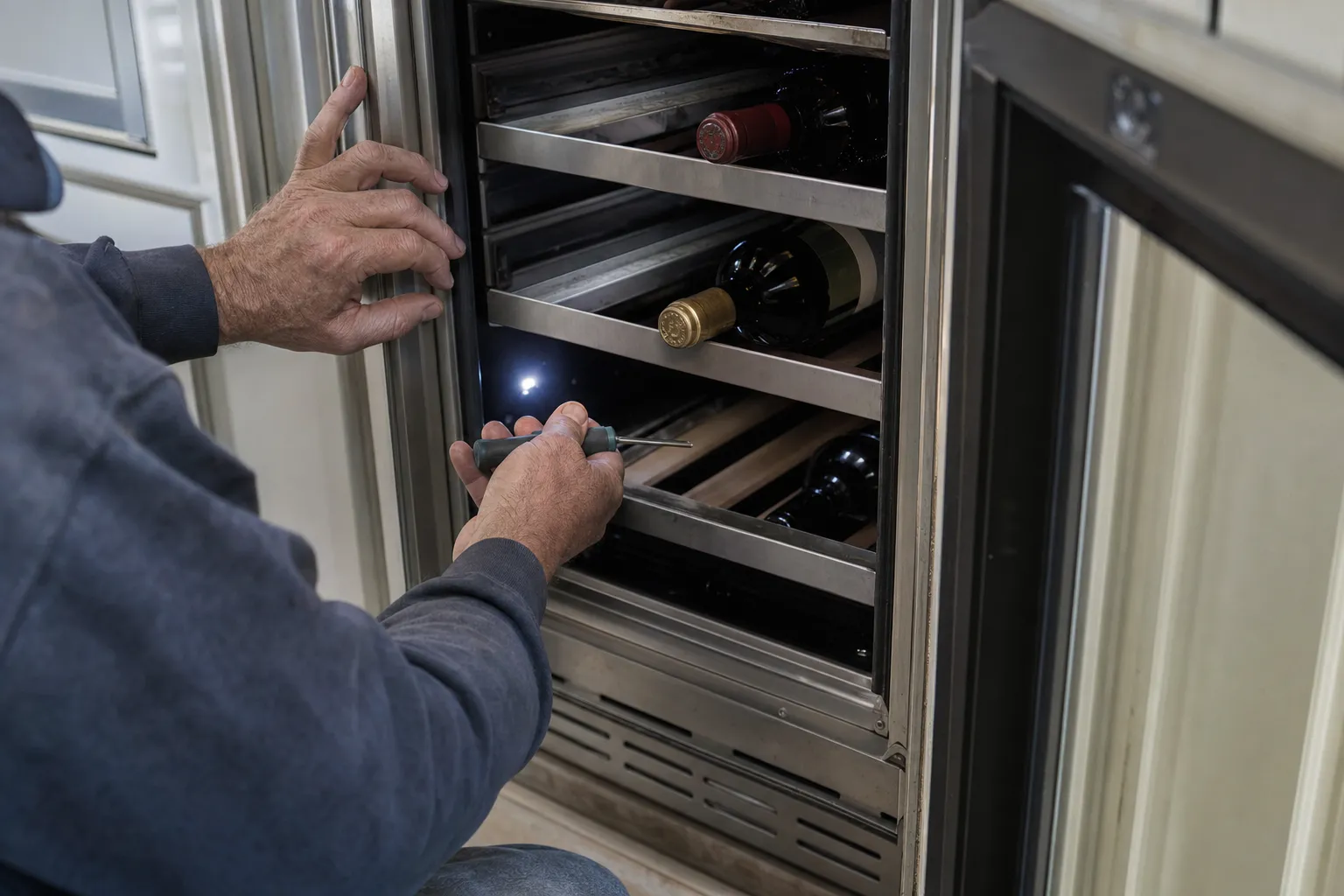
Most questions about wine temperature begin with the number on the panel and whether it is the right one. On the island the answer depends as much on where the unit stands, beside a west window or behind a door that opens all evening, as on what the zone is set to.
This note covers what to set, what a Sub-Zero wine cooler is built to hold, and how to tell a poor setting from a fault.
Two zones, two jobs
Sub-Zero builds its wine storage with a separate evaporator for each zone, so each compartment is cooled and controlled on its own. That is why the two can sit at different temperatures, and why changing one leaves the other where it was.
Neither zone is reserved for reds or whites. Each one holds whatever setting you give it, so the compartments are yours to assign.
What to set
General wine-storage practice puts long-term storage close to 55°F, red or white alike. If the unit is a cellar for bottles that will stay for years, setting both zones there is sensible, and nothing about the machine argues against it.
The second zone earns its place when you want bottles ready to pour. Common serving practice puts sparkling wines and sweet whites in the low-to-mid forties, most dry whites between the mid forties and the mid fifties, lighter reds from the mid fifties into the low sixties, and fuller reds in the low-to-mid sixties. A common arrangement is one zone at storage temperature and the other at the serving temperature of whatever you open most.
What the unit can hold
The use and care guide for your model gives the range each zone will accept, and it is the only place worth taking that figure from, because generations differ. Sub-Zero’s undercounter guides describe the setting moving one degree at a time.
A setting is a target, not a promise, and the zone will move around it as the door opens and the room warms and cools. The gap between the setting and the room matters too: Sub-Zero’s own troubleshooting says the compressor runs longer when the room is warmer, and a zone set near the bottom of the range in a kitchen that warms through the afternoon asks the most of the machine. That is not a fault, but it is where a tiring fan or a dusty condenser shows itself first. If the zone that drifts is also the one that fogs or drips, the water side of the story is in the Lake Air notes.
When a missed setting is a fault
Before calling a zone faulty, give it fair conditions. We want a unit that has been running at least a day, a condenser cleaned within the last few months, and a door that closes fully with nothing pressing against it. Newly loaded bottles lift a zone for a while, and the more you add, the longer it takes to recover.
Then measure rather than read the panel, because the number on it is the setting you chose, not the wine. If a probe still finds a zone well outside its normal swing, the usual suspects belong to that zone alone: the zone thermistor the control reads, the fan that moves air across the zone’s coil, or the coil itself. Finding which one is wine storage repair; the part is priced once it is found, and the $89 visit comes off that bill if you go ahead.
Before you call
-
Step 1
Write down both settings
Note what each zone is set to. The number on the panel is the setting itself, so it records what you asked for, not what the bottles are at.
-
Step 2
Leave it alone for a day
Change nothing, add no bottles and open the door only as you normally would for twenty-four hours before judging either zone.
-
Step 3
Probe each zone in water
Stand a submersible thermometer in a glass of water in the middle of each zone, halfway back and halfway up, and read it twelve hours later.
-
Step 4
Note the hour it drifts
If a zone reads high only in the late afternoon or after a busy evening, say so when you ring. The timing points at the room or the door before any part.
Past these checks the fault is inside the machine. Call Mercer Island Sub-Zero Service on (206) 208-3377 and say which step changed nothing.
Asked about this
What should a Sub-Zero wine zone be set to?
Long-term storage is usually kept near 55°F, and one zone held there suits bottles you are keeping. Use the second zone for what you plan to open soon, at the serving temperature of the wine you drink most. Mercer Island Sub-Zero Service, (206) 208-3377, can look at a zone that will not settle where you put it.
Can the red wine go in the colder zone?
Yes. Each zone is cooled by its own evaporator and holds whatever setting you give it, so the machine has no opinion about which compartment takes reds and which takes whites. Choose by the bottles you reach for most and by which shelf is easiest to get at, then set each zone to suit what goes in it.
How far can a zone wander before it counts as a fault?
There is no published figure we can point you at, and door use, humidity and the room all move a zone about. A brief drift through a dinner is expected and means nothing. What is worth a call is a zone that a probe still finds away from its setting after a quiet day, with a clean condenser and no new bottles.