Lake Air Note 1 of 7
Water, Frost and Ice Inside a Built-In Sub-Zero
- Written by
- Bjorn Aaltonen
- Bench
- wine storage and dual zones
- Years in the trade
- 15
- Refrigerant
- EPA 608 certified
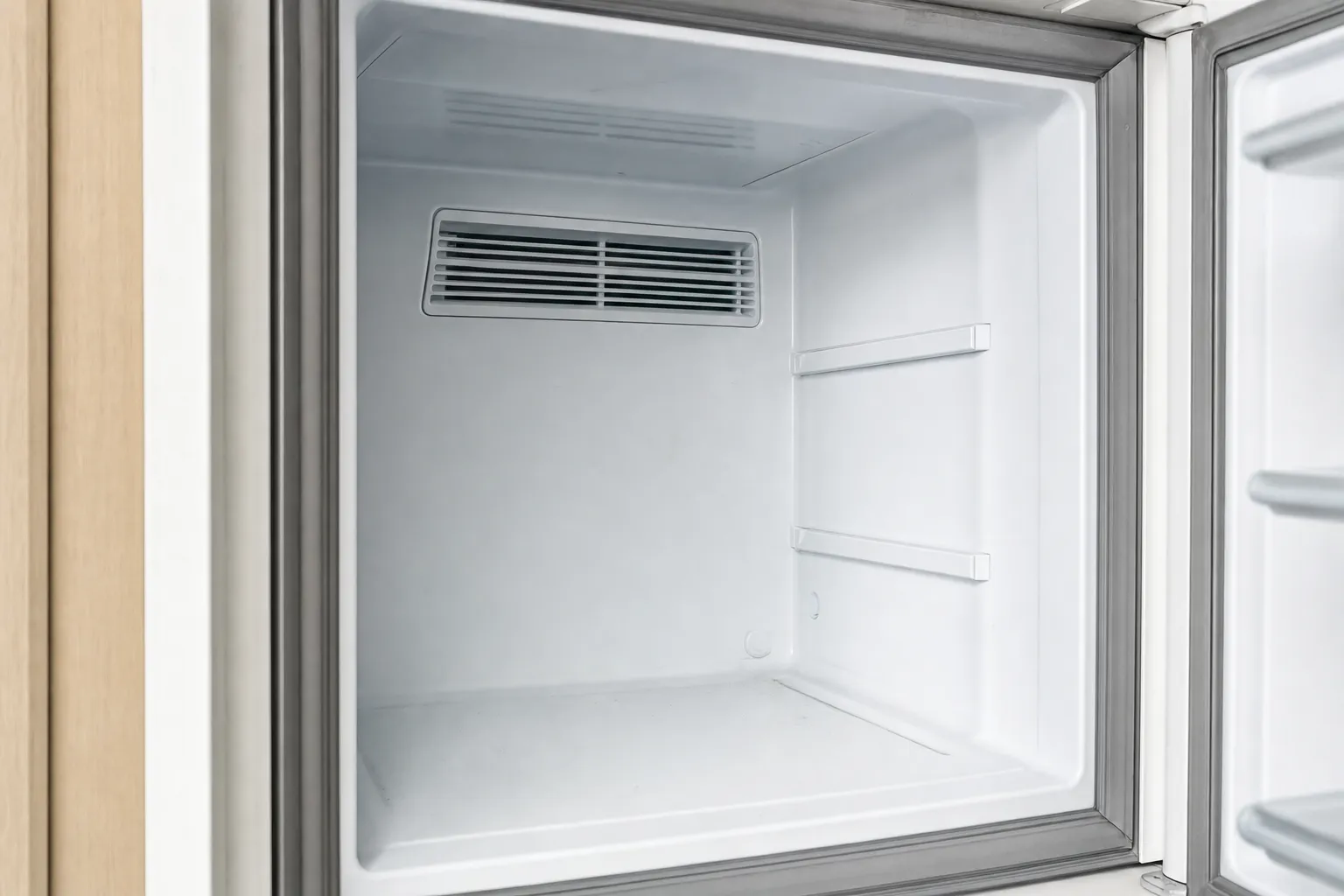
Three separate faults arrive at our phone described in exactly the same words: “there is water in my Sub-Zero.” One of them is a five minute job. One of them is a part and an hour. One of them will keep coming back until the defrost circuit is fixed properly. Telling them apart before anyone opens the cabinet saves a visit, and on a built-in that is worth doing.
Mercer Island gives the problem more to work with than an inland kitchen would. Kitchens close to the water run damper through the summer, and many of the island’s built-ins sit in tight panel-ready surrounds with little spare air around the condenser. Neither of those causes a fault on its own, but both of them make an existing one show up sooner and look worse.
Where the water is actually coming from
Every refrigerated cabinet makes water. The evaporator runs below freezing, warm moist air from the room reaches it every time a door opens, and that moisture condenses onto the coil as frost. At intervals the unit pauses its cooling, warms the coil just enough to melt that frost, and sends the meltwater down a drain trough to a small evaporation pan near the compressor, where the running heat gets rid of it.
That is the normal cycle. Nothing about it is a fault. Water becomes a symptom only when it stops leaving by the route it is supposed to leave by.
So the useful question is not “why is there water” but “where has it stopped”. There are only three realistic answers: it never got to the drain, it got to the drain and could not pass, or it never melted in the first place.
The drain is the usual answer
A blocked defrost drain is the classic cause of standing water in a built-in refrigerator, and on Sub-Zero cabinets it announces itself in a recognizable way. Water pools in the bottom of the fresh food section, usually under or behind the crisper drawers. Pull the drawers out and there is a shallow lake sitting in the molded floor of the liner. The back wall is clear. The freezer is behaving.
The trough behind the evaporator picks up a mix of food debris, gasket dust and mineral scale over the years. Once the drain hole narrows, meltwater backs up in the trough, refreezes on the next cold cycle, and now the drain is not merely narrow but plugged with ice. Each defrost adds a little more water to a channel that cannot take it, and it spills forward into the cabinet.
Clearing it is straightforward but not always quick. The trough has to be thawed rather than forced — poking a wire through frozen debris is how drain tubes get punctured — and then flushed and checked for flow, which is routine refrigerator repair work. If the tube itself has gone brittle or has been kinked behind the unit during a previous reinstall, it is replaced.
Ice on the back wall is a different fault
If the rear wall of the fresh food section has grown a sheet of ice, or the evaporator cover in the freezer has a solid frost build-up within days of being cleared, you are not looking at a drainage problem. You are looking at a defrost circuit that is not completing its cycle.
The suspects are short. A defrost heater that has gone open circuit will not melt anything, so the frost simply accumulates until it blocks airflow across the coil and the cabinet starts creeping warm. A failed defrost terminator or thermistor can end the cycle before the coil is clear. Less often, the control board is not calling for a defrost at all.
You can usually spot this one by touch and time. Frost that returns within a week of a manual defrost is a circuit fault. Frost that takes months to build is normal service life. And if the cabinet temperature has started drifting upward alongside the ice, that is the airflow being choked by the frost itself — the compressor is fine, it just cannot move cold air through a blocked coil.
What you can check before calling
Four things are worth doing yourself, and none of them require tools:
- Check the gasket. Close the door on a dollar bill and pull. If it slides out with no drag, that section of seal is not sealing, and warm humid air is being pulled in continuously. A perished or flattened gasket produces condensation around the door frame and on the top shelves specifically.
- Look at where the water is. Under the crispers with a clear back wall points at the drain. On the back wall itself points at defrost. Around the door opening points at the gasket.
- Check the condenser. On a built-in the condenser sits behind the upper grille. If it is furred with dust and pet hair, the whole system is running hot and long, which makes every moisture symptom worse. It can be vacuumed carefully with a brush attachment. On undercounter units it sits behind the kickplate instead, and the Under the Counter notes cover those.
- Note the timing. Water that appears overnight and not during the day, or only in summer, tells us something different from water that is there constantly.
Write down what you find. Two minutes of that detail on the phone is worth more than any amount of guessing at model numbers.
When it is worth a visit
A one-off puddle after a long door-open episode, a power cut, or a heavy grocery load is not a fault. Dry it, watch it for a week, and if it does not come back it was weather and traffic rather than hardware.
Standing water that returns within days is a drain, and it will not clear itself. Ice on the back wall, or frost that beats you back within a week, is a defrost circuit and it will get worse — first as ice, then as a fresh food section that cannot hold temperature. Both are repairable, both are routine, and neither of them means the unit is finished.
What makes them worth acting on early is the cabinetry rather than the appliance. Water that runs out of the front of a built-in ends up under a panel-ready door and into the substrate of the surround. The repair is the cheap part of that sequence, and it is much cheaper before the joinery gets involved.
Asked about this
Can I just keep mopping the water out until it stops?
You can, but a blocked defrost drain does not clear itself and the water eventually finds the floor of the cabinet, then the cabinetry underneath it. Meltwater that backs up in the trough can refreeze on the next cold cycle, so the puddle tends to get worse rather than better.
Does a warm kitchen cause condensation inside the fridge?
Humidity does, not heat on its own. A lakeside kitchen in July with a door that gets opened forty times a day will show more moisture than the same unit in January. Persistent standing water, though, is a drain or a gasket fault rather than the weather.
Is ice on the back wall the same as a blocked drain?
No. Ice on the rear wall of the fresh food section usually means the defrost cycle is not completing — a heater, terminator or control fault. A blocked drain shows up as water at the bottom of the cabinet with the back wall still clear.