Under the Counter Note 6 of 6
Bar and Butler’s-Pantry Units: What Tends to Fail First
- Written by
- Bjorn Aaltonen
- Bench
- wine storage and dual zones
- Years in the trade
- 15
- Refrigerant
- EPA 608 certified
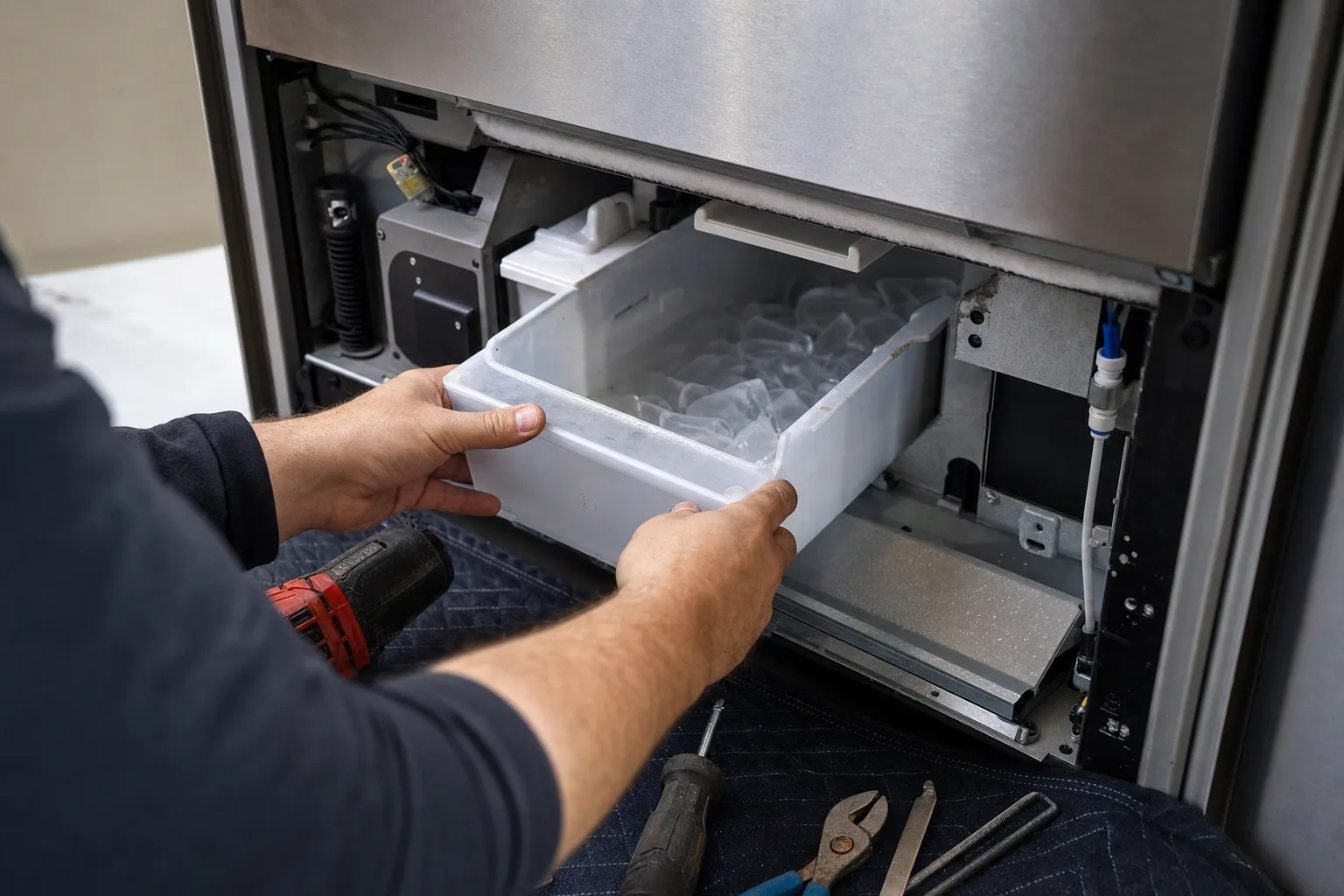
A unit in a bar or butler’s pantry leads a different life from the same unit in a kitchen: idle for days, then opened every few minutes through an evening, packed with drinks that went in warm. On Mercer Island that evening is often a summer one with the deck doors open to the lake, which adds warm room air to everything else, and it tends to be the evening a weak part gives out.
What a party asks of the unit
Four things decide how long a compressor runs: the temperature of the room, the size of the load, how warm it was when it went in, and how often the door stands open. A party pushes every one of those at once. A healthy unit copes and recovers once the house is quiet. A unit with a weakness shows it that evening, and what shows first is fairly predictable.
What tends to fail first
The coil. A bar floor collects cardboard fibers, dust and whatever the vacuum misses, and the condenser behind the kickplate collects what the floor does. A partly blocked coil manages a quiet week and falls behind on a busy night. The note on toe-kick ventilation covers what to keep clear and how Sub-Zero says the coil should be cleaned.
The seal. A door opened constantly wears its gasket faster, and a door bumped by a hip or a tray can stop closing square. Sub-Zero’s checklist for frost and condensation begins with a door that closes properly and a gasket without tears, and a busy bar door is the one most likely to fail it.
The lights. When a door is left open, Sub-Zero switches the interior lights off to keep their heat out, and they stay off until the door has been shut for an hour. After a party that looks like a fault and usually is not. On the current Designer models the LED interior lighting is a service replacement rather than an owner job; the older UC-24 models take a screw-in bulb.
The ice. Undercounter combination units with an ice maker are the first thing a bar notices when something is wrong. Sub-Zero’s guides point out that ice left unused can fuse into a block, and that the first few batches after the ice maker is first started should be thrown away, since they can carry impurities from new plumbing connections. The older UC-24CI makes a batch of eight cubes about every two hours, so a bin emptied early in the evening will not be full again by the end of it. On current Designer combination units a max ice setting raises production by up to 30% for 24 hours, which is worth switching on the day before a party rather than the hour before. An ice maker that has stopped altogether belongs to our ice maker repair work.
The power. Bars are built around sinks, and outlets near a sink are often ground fault outlets with test and reset buttons. A bar unit that goes dark with nothing else wrong may simply have tripped one. Reset it once, and take any repeat to an electrician.
Habits that help
Load drinks the day before rather than the hour before. Keep the floor in front of the kickplate clear, including on party nights when cases get stacked everywhere. Close the door firmly after each round. And in a butler’s pantry beside a cool hallway or an unheated space, keep the room in mind: a cold pantry and a warm one ask different things of the same machine, and a room well away from ordinary kitchen temperature can make a sound unit look faulty.
Before the next party
If a bar unit is already hinting at trouble, with a warm afternoon, a slow ice maker or a door that needs a push, have it seen before the event rather than during it. The One Bridge notes explain how an island visit is planned so the right parts come with us.
Before you call
-
Step 1
Clear the floor in front of the unit
Move cases, bags and mats off the kickplate grille, and keep them off on party nights as well.
-
Step 2
Check the door after the last round
Close it firmly and make sure nothing in the door or on the top shelf holds it off the gasket.
-
Step 3
Give dark lights an hour
If the interior lights went out during the evening, keep the door shut for an hour before treating them as a fault.
-
Step 4
Check the ice maker arm and the bin
The arm has to be down for the ice maker to produce. Seat the bin fully, and empty out fused ice so the maker can refill it.
Past these checks the fault is inside the machine. Call Mercer Island Sub-Zero Service on (206) 208-3377 and say which step changed nothing.
Asked about this
The ice has fused into one block. Is the ice maker broken?
Not usually. Sub-Zero's undercounter guides say ice that sits unused can fuse together, and the remedy is to empty the bin and let the ice maker replenish it. If it keeps happening with regular use, or the bin refills very slowly afterwards, it is worth a look. Mercer Island Sub-Zero Service repairs undercounter ice makers; call (206) 208-3377.
Should the bar unit be switched off between parties?
Only for a long absence, and then the way Sub-Zero describes: turn it off at the control panel, empty it and leave the door slightly open so the inside stays dry. Switching a bar unit off and on between weekends gains little and leaves it warm when you want it cold. A wine collection in the same bar needs its own plan.